Electric Cars Hit 22.3 Percent in October: Sales Didn't Rise, the Market Shrank
The car market shrank 28.4 percent in October, while electric sales held flat at 14,467. The 22.3 percent share comes from a shrinking denominator, not growth. The post also has a charging tariff calculation for November buyers.

In October, 64,939 cars were sold; a year earlier, the same month had 90,695. According to ODMD (Automotive Distributors' and Mobility Association) data reported by Oto Aktüel, that is a 28.40 percent drop.
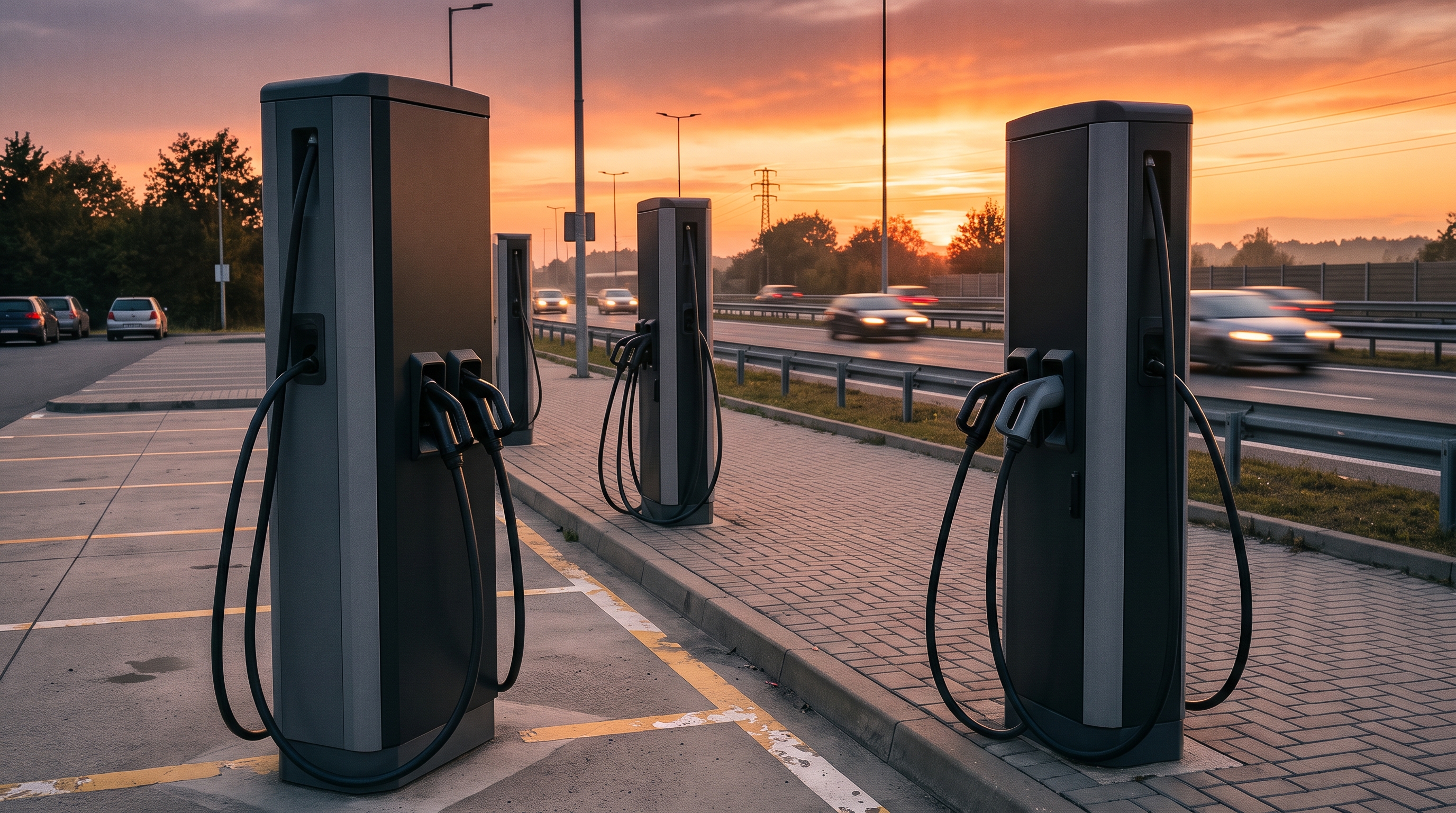
In this picture, electric cars reached a 22.3 percent share with 14,467 units. You may read "share rose" in the headlines, but look closely at the numbers and the story is different.
The share didn't rise, it stayed flat: electric sales stalled at 14,380
Pure electric car sales in October were 14,380; in October 2025 the figure was 14,427. The gap is 47 units, about 0.3 percent. Add 87 range-extender vehicles and the total comes to 14,467.
Let's show the math: divide 14,467 by 64,939 and you get 22.3 percent; that calculation is ours. The share of the 14,380 pure electric units in total cars, on the other hand, is given as 22.14 percent by Teknoblog. The two numbers come from different definitions; you shouldn't mix them in the same sentence.
Oto Aktüel also writes that the share fell 0.4 percent year over year. So the electric share didn't climb, it stayed flat. With the total market shrinking and electric sales standing still, the ratio was preserved; the share comes from a shrinking denominator, not from growth.
You can see this with your own measure too. There is a gap of 25,756 units between the two totals above; that is a number we derived. Since pure electric sales fell by only 47 units year over year, almost all of the loss came in non-electric cars. We work out that part by calculation; no source gives a figure for this split directly.
No data explaining the cause of the drop appears in Motor1's ODMD report or in Oto Aktüel's piece. We aren't making up a cause; we only describe the mechanism the data shows.
Togg and the over-160 kW segment held the balance
If the electric total held steady, something inside it must have shifted. Electric cars above 160 kW rose 194.7 percent in October to 1,550 units; those at 160 kW and below fell 7.7 percent to 12,917. Add these two figures and you get 14,467: the loss in the smaller segment was covered by the gain in the upper one.
On the brand side, Togg is decisive. Togg sold 6,761 in October (T10X 4,059, T10F 2,702); that is 47 percent of pure electric sales. The same source lists, in order, the KG Mobility Torres at 1,705, the Hyundai IONIQ 3 at 1,077 and the Citroën C3 at 430. The Tesla Model Y stayed at just 25 units in October.
Togg is near the top not only of the electric list but of the overall table too. In the total car ranking, Renault with 9,899, Volkswagen with 7,069, Togg with 6,761 (10.4 percent) and Hyundai with 5,497 make the top four. An electric brand placing third in the total market is the month's most attention-demanding data point.
Over ten months, electric fell less than the market
It's easy to comment on a single month, so let's look at a longer slice. In January-October 2026, electric car sales were 135,979, the share 19.6 percent and the annual decline 8.3 percent. In the same period the total market shrank 15.33 percent to 883,799.
So over ten months electric shrank too, but less than the overall market. That is why the share is approaching the 20 percent threshold.
One caution: for the same period Teknoblog gives pure electric sales as 135,142, with Togg's share at 44,187 units, 32.7 percent. The difference between the two figures comes from whether range extenders are included. Whichever source you read, check the definition.
Work out the charging bill before the November campaign
A campaign price lowers the car's sticker, but the charging tariff determines its running cost. According to Voltbu tariff data, as of November 11, 2026, taking the lowest price for each current type across 175 operators, the AC median is 9.90 TL/kWh and the DC median is 12.95 TL/kWh.
The range is wide too: between 5.90 TL and 13.99 TL on AC, and between 7.70 TL and 16.49 TL on DC. These are the lowest tariffs per operator; keep in mind they may depend on a specific membership or campaign condition.
Here is how to do your own calculation. As an example, take a 40 kWh fill (the assumption is ours). At the AC median that is 396 TL, at the DC median 518 TL. Between DC's cheapest and most expensive values there is a spread from 308 TL to 659.60 TL.
To spread this over a month, assume four fills a month (this is our assumption too). At the AC median that is 1,584 TL, at the DC median 2,072 TL; putting the 488 TL gap between them next to a campaign discount on the car's price makes the decision a bit more concrete.
If you have AC charging at home or at work and will fill the car mostly there, the DC price stays secondary for you. If you travel between cities, the picture flips and you need to look at DC prices along your route. You can compare them for your own route in Voltbu's route planner.
Before you go to the showroom in November, look at three things: which power segment the car is in, where you will charge most of the time, and the DC tariff along your route. Then repeat the 40 kWh calculation above with your own kWh value. The result will be felt in your pocket longer than the campaign tag.
If you want to compare how the market moved against earlier months, see The Electric Car Market in August 2026: Togg on Top, Overall Sales Down. We also have a post on battery chemistry: NMC or LFP? A Guide to Electric Vehicle Batteries in Türkiye.
Sources
Related to this article
Tuğçe Özen
Writes about mobility technology and the electric vehicle ecosystem. Works actively on the Voltbu team.
Comments
You need to sign in to comment.
Sign InNo comments yet. Be the first to write one.