NMC or LFP? A Guide to EV Batteries in Türkiye
The differences between the NMC and LFP battery chemistries used in Togg, Tesla, BYD, and MG models — in range, charging time, and cold-weather performance — and what to watch for when planning your route.
People thinking about buying an electric car usually ask "Togg or Tesla?" But the real difference isn't in the brand's logo — it's hidden in the chemical makeup of the battery pack under the seat. Two main battery chemistries stand out among electric cars sold in Türkiye: high-energy-density NMC (nickel-manganese-cobalt), and the cheaper, more durable LFP (lithium-iron-phosphate), which lags behind in cold weather and energy density. Whether your car's brand is Togg, Tesla, BYD, or MG, this choice directly affects your daily charging habits and your route planning.
What's the basic difference between NMC and LFP?
Because NMC batteries can store more energy in the same volume, they generally mean longer range and a lighter pack. LFP batteries, on the other hand, contain no cobalt, cost less to produce, and have a longer cycle life; in exchange, they can perform more weakly than NMC at low temperatures and need a heavier or bulkier pack for the same capacity.
Togg's switch to LFP
Togg, as of June 15, 2026, switched the long-range versions of the T10X and T10F from NMC to LFP batteries; capacity rose from 88.5 kWh to 89.6 kWh, while WLTP range stayed fixed at 610 km. The switch shows up on the charging side too: 20%-80% charging time on 180 kW DC fast charging dropped from 28 minutes to 26.5 minutes, but due to the added weight, 0-100 km/h acceleration rose from 7.8 seconds to 8.0 seconds.
The CATL partnership only covers the B segment
Togg's partnership with CATL doesn't cover every model it makes — it only covers the new B-segment product family; the first of three new LFP-battery models built on CATL's Bedrock Chassis platform is targeted to enter series production in 2027. In other words, the T10X/T10F switch and the CATL partnership aren't the same thing — they're two separate developments.
Siro's Gemlik factory
Siro, the joint venture between Togg and Farasis Energy, plans to produce battery modules/packs at its Bursa Gemlik facility with a capacity of 20 GWh a year — enough for roughly 250,000-300,000 electric cars. This production capacity shows that Türkiye's domestic battery supply is entering an LFP-heavy period too.
Which chemistry does Tesla use in Türkiye?
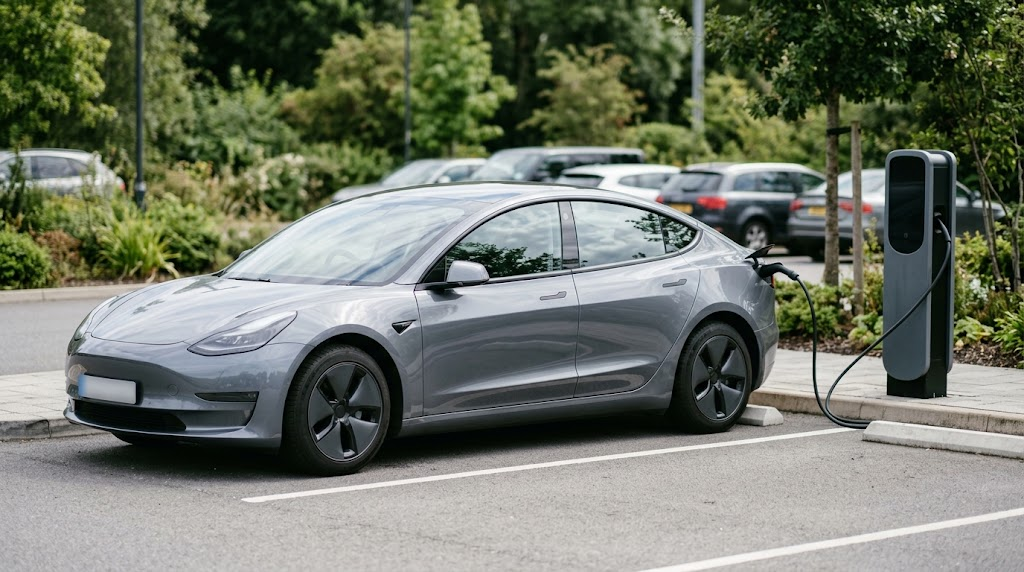
There's a similar split on Tesla's side too. In the new Model 3 going on sale in Türkiye in the second half of 2026, the RWD version offers 520 km of WLTP range with a 60 kWh LFP battery, while the Long Range AWD version reaches 610 km of WLTP range with 79 kWh of capacity and DC fast-charging performance that can fill up in roughly 25 minutes. So at Tesla too, the entry-level version is LFP, while the long-range version is built on a different chemistry.
BYD and MG: Chinese brands growing with LFP
Beyond Togg and Tesla, brands growing in the Turkish market like BYD and MG also favor LFP chemistry. BYD entered the Turkish market with its LFP-chemistry "Blade Battery" technology; this cobalt-free battery is said to offer an advantage in thermal management and safety thanks to its blade design, and is used in models like the Atto 3. On MG's side, the MG4 Electric offers 350 km of range with a 51 kWh battery in the Comfort trim and 435 km with a 64 kWh battery in the Luxury trim, and can reach 80% charge in 28 minutes on 140 kW DC fast charging. The more entry-level MG ZS EV offers 263 km of WLTP range with 44.5 kWh of battery capacity, reaching 80% charge in 40 minutes on DC fast charging.
LFP's weight in the market is growing
According to ODMD (Türkiye's automotive distributors association) data, electric car sales in Türkiye reached 66,353 units in the January-May 2026 period, with market share rising to 18.6% — a 10.5% increase over the same period last year. The same data shows models under 160 kW, which mostly favor LFP, grew 18.8%, while higher-power models fell 31.8%. This picture shows LFP is no longer a niche choice — it's a chemistry Türkiye's EV buyers are increasingly turning to.
How does this affect your charging and route planning?
Whichever brand you drive, knowing whether your car is LFP or NMC has practical consequences. If you're heading out on a long trip in cold weather with an LFP-battery car, you need to factor in that the real range can fall below what's stated; this loss is generally more limited in an NMC-battery car. On the charging side, there are examples where LFP holds its charging power and fills up in less time. When planning your route on Voltbu, we try to take chemistry-based differences like these into account too, suggesting the stations and stops best suited to your car's actual charging behavior.
Sources
Related to this article
Tuğçe Özen
Writes about mobility technology and the electric vehicle ecosystem. Works actively on the Voltbu team.
Comments
You need to sign in to comment.
Sign InNo comments yet. Be the first to write one.