How to Calculate EV Charging Cost: Real Numbers for Home, AC, and DC
Work out what a fill-up actually costs at home, on public AC, and on DC fast charging, using your own numbers. This guide covers tiered home electricity pricing, Voltbu's AC/DC median prices, a comparison with gasoline, and the charges EPDK's new rules mean you should no longer see on your bill.
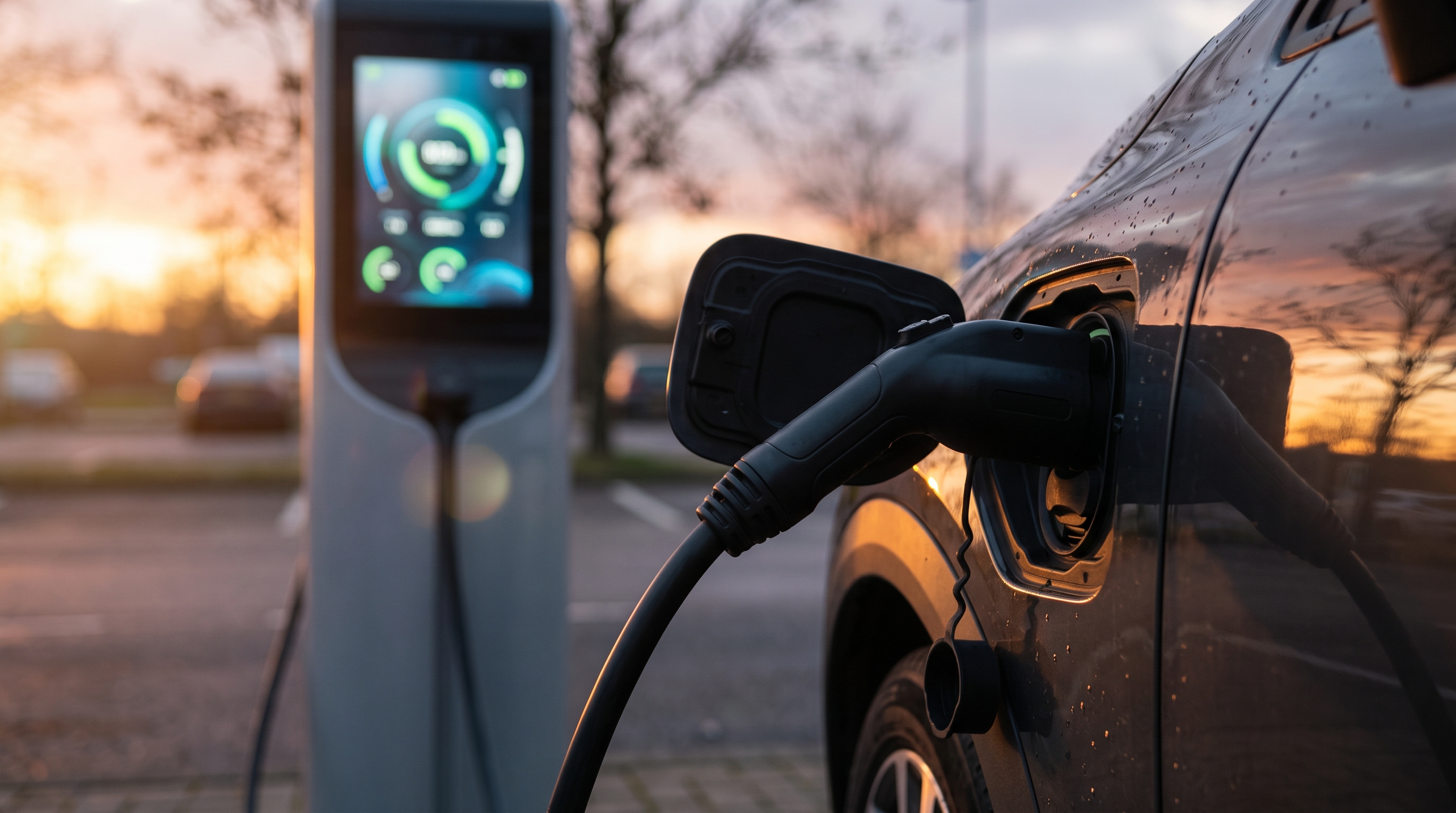
The screen reads "62%," the charging cable is in your hand, and you have no idea how much it's about to cost you. Yet this calculation takes just three lines.
The calculation takes three lines: kWh times TL/kWh
There's one formula: the kWh you need, multiplied by the unit price (TL/kWh). The tricky part is converting battery percentage into kWh. If you're charging a 60 kWh battery from 20 percent to 80 percent, that's a 60-point gap — in other words, 60 percent of 60 kWh, which is 36 kWh. That's what we mean by "one fill-up": 36 kWh.
The same logic works out the cost per 100 km: consumption (kWh/100 km) times TL/kWh. An average electric car uses around 17 kWh/100 km in city driving; that's an average, and it rises in winter and on the highway. All the calculations below keep the 36 kWh fill-up and 17 kWh/100 km consumption fixed — you can plug in your own car's actual consumption instead.
Home charging starts cheap, but the tier can catch up with you
Residential electricity pricing is tiered: one price applies up to 240 kWh a month, and a higher price kicks in above that threshold. Under the published tariff, these tiers are 2.92 and 4.32 TL/kWh before tax. VAT, the municipal consumption tax, and the energy fund are added on top of that on your bill; once all charges and taxes are included, what you actually pay per kWh in the first tier comes to 3.21 TL; the tax-inclusive equivalent of the second tier works out to roughly 4.75 TL at the same rate. We used these tax-inclusive figures, the ones that actually show up on your bill, in the calculations below. Distribution charges vary by region, so the most accurate approach is to check the kWh price on your own bill.
If you're in the first tier, a 36 kWh fill-up costs 115.56 TL (36 × 3.21). If you've moved into the second tier, the same fill-up comes to roughly 171 TL. The gap runs the same way for 100 km: 54.57 TL in the first tier, roughly 80.75 TL in the second. Which tier you're in by the end of the month determines more than half of your charging bill. Since EV charging runs through your home meter, this consumption can quickly push the month into the higher tier.
The same fill-up on public AC can differ by 291 lira
On public AC charging, the price varies by operator. According to data Voltbu collected from 173 operators as of October 7, 2026, the AC median price is 9.90 TL/kWh; the cheapest operator sells at 5.90 TL/kWh, the most expensive at 13.99 TL/kWh. At the median price, a 36 kWh fill-up costs 356.40 TL, and 100 km costs 168.30 TL.
The spread between the cheapest and most expensive is real money: the same 36 kWh fill-up ranges from 212.40 TL to 503.64 TL — a difference of up to 291 TL. On AC, some of the energy drawn from the grid is lost as heat, so what the meter shows isn't exactly the same as what reaches the battery; we couldn't confirm the size of this loss from a reliable source, so we're not giving a specific percentage.
DC fast charging: what you pay extra for speed
DC pricing runs higher. In the same dataset, the median is 12.99 TL/kWh, ranging from 7.70 to 16.49 TL/kWh. At the median, a 36 kWh fill-up costs 467.64 TL, and 100 km costs 220.83 TL. DC charging used to carry separate prices by power tier (50/80/150/250 kW); according to Donanımhaber, that practice was scrapped, and operators are now required to post one price for AC and one for DC. If you see a different number based on connector power, that's no longer a valid practice.
The comparison with gasoline makes the picture clear
As of October 7, 2026, gasoline in Istanbul costs 84.70 TL per liter on the European side and 84.50 TL on the Anatolian side. For a gasoline car using 7 liters/100 km, the cost per 100 km is 592.90 TL (at the European-side price). You cover the same 100 km for 54.57 TL at home in the first tier, 168.30 TL on public AC, or 220.83 TL on DC. Even DC, the most expensive charging option, still costs less than half of the gasoline figure per 100 km.
These charges should no longer appear on your bill
EPDK's (Türkiye's energy market regulator) regulation took effect on July 1, 2026. According to Apara, charging fees are now billed only on energy consumed, in TL/kWh; extra charges such as a connection fee, a session-start fee, or an equipment-use fee can no longer be charged. If one of these shows up on your bill, it's now against the regulation.
There are two more practical details. According to İşçi Haber, at least one DC unit of 50 kW or higher added to highways and state roads must have bank card, credit card, or cash payment infrastructure; downloading an app or signing up for membership isn't required. According to ParaMedya, the price gap between members and non-members is capped at 25 percent, and no extra fee can be charged for membership.
The real way to bring the cost down is your charging habit. If you can, charge at home without going past the month's first 240 kWh tier; if you're out, since the AC price on the same route can range from 5.90 to 13.99 TL/kWh, check the price before you plug in. On Voltbu's Charging Prices page, you can compare these numbers by operator and see which station is cheaper that day. Once you know your own car's consumption per 100 km, just redo the three calculations above with your own numbers.
Sources
- Piagrid - Tiered residential electricity tariff (before tax)
- Gazelektrik - kWh price including taxes and charges
- Ekonomim - October 7, 2026 fuel prices
- Apara - EPDK's new regulation on electric vehicle charging services
- Donanımhaber - EPDK's charging regulation: one price, card payment
- İşçi Haber - Credit cards become mandatory on highways
- ParaMedya - Extra fees banned
- Voltbu Charging Prices
Bilal Koçyiğit
Writes about mobility technology and the electric vehicle ecosystem. Works actively on the Voltbu team.
Comments
You need to sign in to comment.
Sign InNo comments yet. Be the first to write one.