ÖTV Shock on the Hyundai IONIQ 6: Why Did the Price Jump 743,000 TL Overnight?
When the Hyundai IONIQ 6 Advance crossed the ÖTV (Türkiye's special consumption tax) base threshold, it jumped from the 25% bracket to the 55% bracket, and its price rose by 743,000 TL overnight. We explain how Türkiye's ÖTV bracket system hits EV buyers.
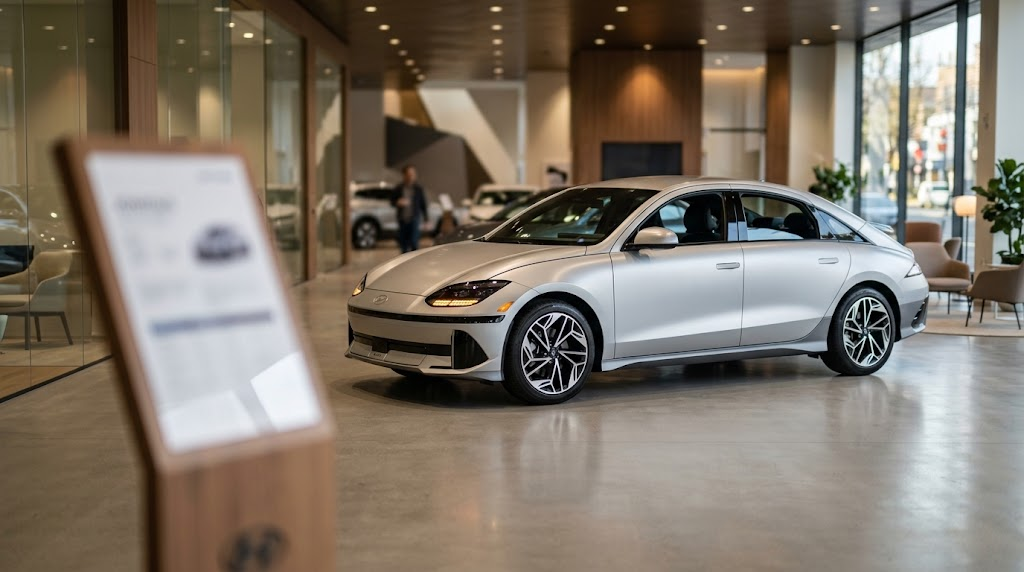
For anyone in Türkiye planning to buy an electric car, September 2026 offered a striking example of how prices can change overnight. The Hyundai IONIQ 6 Advance had gone on sale during August's launch campaign at a 2,483,000 TL sticker price, in the 25% ÖTV (Türkiye's special consumption tax) bracket. But because the untaxed base threshold wasn't updated, the car suddenly moved into the 55% bracket, pushing its price up to 3,225,000 TL.
A roughly 30% hike overnight
The numbers are clear: the Advance version's price rose by 743,000 TL (roughly 30%), from 2,483,000 TL to 3,225,000 TL. The reason for this increase wasn't any change in the car's technical specs — it was purely a bracket shift in tax regulation. The car, sold at a low base in August's launch campaign, crossed the ÖTV base's upper threshold when it tried to stay at the same price level in September, automatically pushing it into the higher tax bracket.
How does the ÖTV bracket system work?
The ÖTV rate applied to electric cars in Türkiye is determined by motor power and the untaxed sale price — the base. Under the 2026 regulation, electric cars with motor power of 160 kW or below are taxed at 25% ÖTV as long as the base doesn't exceed 1,650,000 TL. Cars that go above that threshold jump straight to a 55% rate. For models caught between the two brackets, that gap means several hundred thousand lira in extra cost — exactly what happened to the IONIQ 6 Advance.
The trickiest part of this system is that the base threshold stays fixed while the listed prices of cars on sale can shift with campaign periods, exchange rate moves, or manufacturer price updates. A model sitting in the 25% bracket today isn't guaranteed to still be there a few weeks later.
The Progressive version was affected too
The change wasn't limited to the Advance. The IONIQ 6's Progressive version, with its 160 kW motor, also rose, from 3,725,000 TL to 3,770,000 TL. This version offers up to 680 km of range with its 84 kWh battery pack, while the Advance version has 521 km of range with its 63 kWh battery. The range and equipment gap between the two versions was already large, and the ÖTV bracket shift made that gap even harder to read.
As the electric car market grows, so does the tax risk
Bracket shifts like this pose a significant risk not just for a single model, but for a growing market. 93,403 fully electric cars were sold in Türkiye in the January-July 2026 period, and electric cars reached a 18.7% share of the total market. With this many buyers in the market, any model priced close to the base threshold can face an unexpected price hike risk, just like the IONIQ 6 did.
The lesson for buyers
This episode holds a few concrete warnings for anyone considering an electric car. First, a model's launch or campaign price might not be its lasting price; cars priced close to the base threshold can see a difference of several hundred thousand lira appear at any time. Second, before rushing a purchase decision, it's worth checking the current ÖTV bracket and which side of it the car sits on. Third, this risk is even more pronounced for models with motor power near or above the 160 kW limit.
At Voltbu, our goal is to make life easier for electric car owners when it comes to finding charging stations and planning routes; but keeping track of tax and pricing dynamics like these before you buy matters just as much as range or charging infrastructure for making the right purchase decision.
Sources
Related to this article
Tuğçe Özen
Writes about mobility technology and the electric vehicle ecosystem. Works actively on the Voltbu team.
Comments
You need to sign in to comment.
Sign InNo comments yet. Be the first to write one.